Methods for Preventing MRSA
• Maintain good hygiene. Wash your hands often with soap and warm water. Wash your body after training, never right before.
• Clean and cover all cuts scrapes burns and wounds until healed.
• Don’t share personal items such as mouthpieces, headgear, towels and razors, shoes, pillows, etc.
• Seek medical care if you think you might have an infection. The earlier, the better.
Screening programs
Patient screening upon hospital admission with nasal culture prevents the cohabitation of MRSA carriers with non-carriers and exposure to infected surfaces. It is essential for preventing MRSA. In the United States and Canada, the Centers for Disease Control and Prevention issued guidelines on 19 October 2006, cited the need for additional research, but declined to recommend such screening.
A report in the journal "Pediatrics" says 2.4% of healthy children may be carrying the staph infection "MRSA" in their nasal passage.
Surface sanitizing
Alcohol has been proven to be an effective surface sanitizer against MRSA. Quaternary ammonium can be used in conjunction with alcohol to extend the longevity of the sanitizing action. The prevention of MRSA and other nosocomial infections involves routine and terminal cleaning. Non-flammable Alcohol Vapor in Carbon Dioxide systems (NAV-CO2) do not corrode metals or plastics used in medical environments and do not contribute to antibacterial resistance.
How to Prevent MRSA in Hospitals
In healthcare environments, MRSA can survive on surfaces and fabrics, including privacy curtains or garments are worn by care providers. Complete surface sanitation is necessary to eliminate MRSA bacteria in areas where patients are recovering from invasive procedures. Testing patients for MRSA upon admission, isolating MRSA-positive patients, decolonization of MRSA-positive patients, and terminal cleaning of patients' rooms and all other clinical areas they occupy is the current best practice protocol for nosocomial MRSA.
Hand washing
At the end of August 2004, after a successful pilot scheme to tackle MRSA, the UK National Health Service announced its Clean Your Hands campaign. Wards were required to ensure that alcohol-based hand rubs are placed near all beds so that staff can hand wash more regularly. If this cuts infection by just 1%, the plan will pay for itself many times over. A June 2008 report, centered on a survey by the Association for Professionals in Infection Control and Epidemiology, concluded that poor hygiene habits remain the principal barrier to significant reductions in the spread of MRSA.
Decolonization
After the drainage of boils or other MRSA treatment, patients can shower at home using chlorhexidine (Hibiclens) or hexachlorophene (Phisohex) antiseptic soap from head to toe, and apply mupirocin (Bactroban) 2% ointment inside each nostril twice daily for seven days, using a cotton-tipped swab. Doctors may also prescribe strong antibiotics such as Clindamycin, Levofloxacin (Levaquin), and possibly Flagyl for the side effects of the Clindamycin. Household members are recommended to follow the same decolonization protocol.
Preventing MRSA - More information
Mathematical models describe one way in which a loss in infection control can occur after measures for screening and isolation seem to be useful for years, as happened in the UK. In the "search and destroy" strategy that was employed by all UK hospitals until the mid-1990s, all patients with MRSA were immediately isolated. All staff was screened for MRSA. The staff was prohibited from working until they had completed a course of eradication therapy that was proven to work. Loss of control occurs because colonized patients are discharged back into the community and then readmitted: when the number of colonized patients in the community reaches a certain threshold, the "search and destroy" strategy is overwhelmed. One of the few countries not to have been overwhelmed by MRSA is the Netherlands: a vital part of the success of the Dutch strategy may have been to attempt eradication of carriage upon discharge from the hospital.
Current US guidance does not require workers in general workplaces (not healthcare facilities) with MRSA infections to be routinely excluded from going to work.
Unless directed by a healthcare provider, exclusion from work should be reserved for those with wound drainage that cannot be covered and contained with a clean, dry bandage and for those who cannot maintain good hygiene practices. Workers with active MRSA infections should be excluded from activities where skin-to-skin contact is likely to occur until their infections are healed to prevent MRSA spread. Healthcare workers should follow the Centers for Disease Control and Prevention's Guidelines for Infection Control in Health Care Personnel.
For preventing MRSA or Staph Infection in the workplace, employers should ensure the availability of adequate facilities and supplies that encourage workers to practice good hygiene; that surface sanitizing in the workplace is followed, and that contaminated equipment is disinfected with Environmental Protection Agency (EPA)-registered disinfectants.
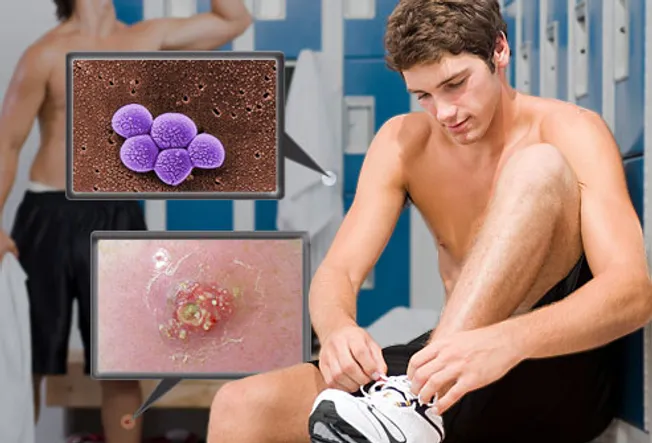
MRSA Prevention and Control Strategies MRSA
- Cover all open cuts abrasions and wounds. Keep them covered, clean and dry until healed. Pus from infected wounds can contain MRSA. Follow the doctor’s instructions about proper care.
- Do not itch. Do not pick, pop or open wounds by yourself.
- Clean your hands often. You, your family, and others in close contact with the infection should wash their hands often with soap and water. Wash your hands especially after changing bandages or after contact with the wound.
- Do not share personal items. Personal items include towels, braces, headgear, washcloths, razors, and clothing including uniforms.
- Wash used sheets, towels, and clothes with hot water and laundry detergent. Use a dryer to dry them thoroughly.
- Wash clothes according to the manufacturer’s instructions on the label. Clean your hands after touching dirty clothes.
-
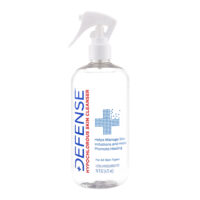
Hypochlorous Skin Cleanser
$23.99 Select options This product has multiple variants. The options may be chosen on the product page
-
Laundry Booster
$24.95 Select options This product has multiple variants. The options may be chosen on the product page
-
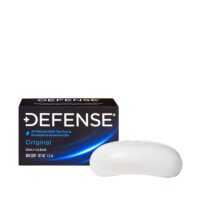
Original Bar Soap
Price range: $5.99 through $359.99 — or subscribe to save 15% Select options This product has multiple variants. The options may be chosen on the product page
-
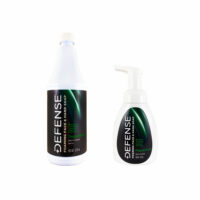
Peppermint Foaming Face and Hand Soap
Price range: $9.95 through $29.85 — or subscribe to save 15% Select options This product has multiple variants. The options may be chosen on the product page